

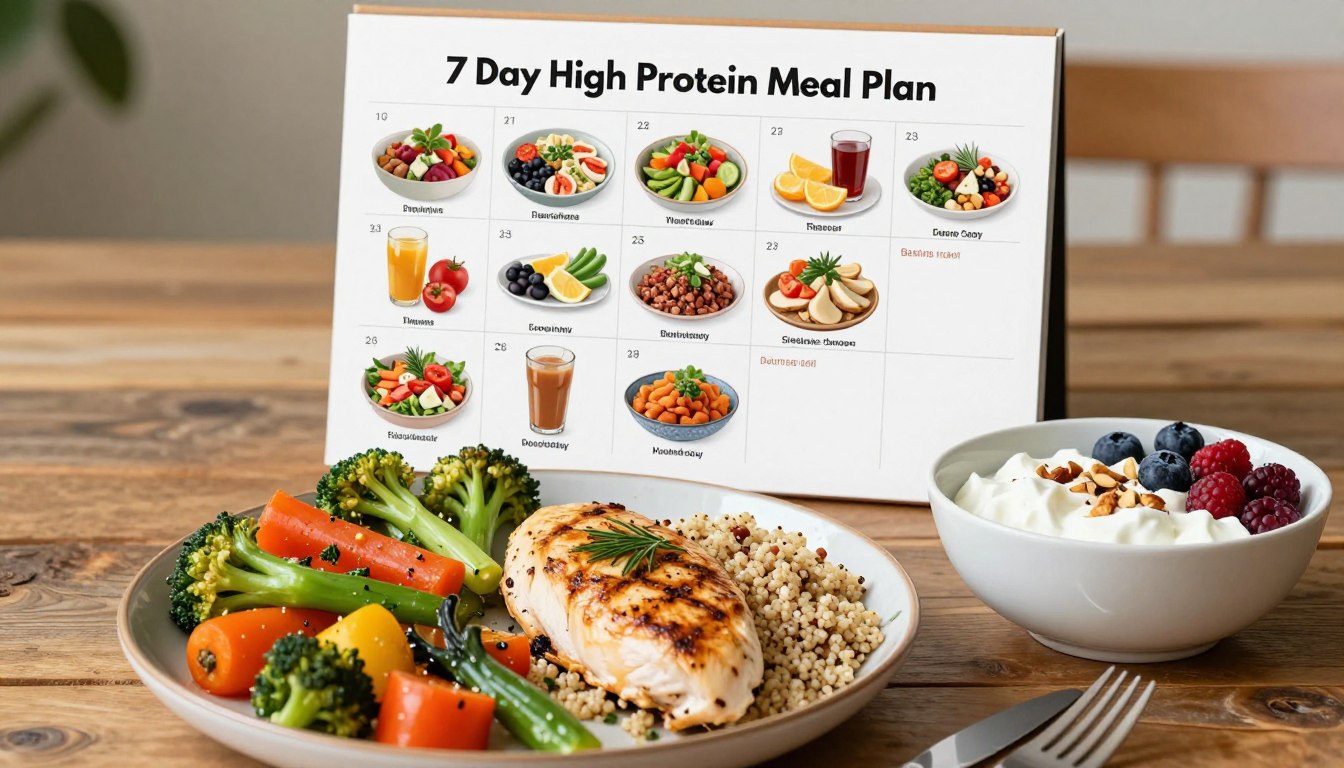
Did you know that nearly 70% of Americans struggle with maintaining a balanced diet? This staggering statistic highlights the need for effective nutrition strategies. One such strategy is a structured approach to incorporating more protein into your daily routine.
Our guide introduces you to a comprehensive 7-day plan that aims to support your fitness goals. By following this structured approach, you will learn how to seamlessly integrate more protein into your meals. This is essential for boosting your overall health and managing your weight effectively.
We emphasize a balanced way of eating that ensures you receive the right nutrients every day. This approach is backed by research, helping you to feel satisfied without deprivation. Small changes to your daily meals can lead to noticeable improvements in your energy levels and physical performance.
Key Takeaways
- This guide offers a structured approach to nutrition for sustainable weight management.
- Incorporating more protein can support your overall health and fitness.
- Learn to create balanced meals that fuel your body effectively.
- Research-backed strategies help you manage weight without feeling deprived.
- Simple meal changes can enhance your energy and performance.
Introduction to Your 7 Day Meal Journey
Many people find it challenging to keep their diets balanced and nutritious. This guide is designed to help you navigate your 7-day journey, ensuring you consistently meet your daily protein needs.
Throughout this plan, you will discover core nutrition principles that are essential for enhancing your overall health and wellness. You can expect practical advice on meal preparation to help you stay on track.
Understanding the science behind your protein intake is crucial for achieving your weight loss goals while maintaining lean muscle mass. Our approach focuses on real foods that deliver the nutrients your body needs to function at its best.
| Day | Focus | Key Principle |
|---|---|---|
| 1 | Introduction | Understanding Protein Needs |
| 2 | Meal Prep | Planning for Success |
| 3 | Cooking Techniques | Healthy Cooking Methods |
| 4 | Grocery Shopping | Choosing Quality Ingredients |
| 5 | Staying on Track | Maintaining Consistency |
Benefits of Embracing a High Protein Diet
Striking a balance in your diet can be a daunting task for many. However, embracing a diet rich in protein offers numerous benefits that can help you achieve your health goals. This dietary shift can significantly enhance your overall well-being.
One of the key advantages is the ability to boost your metabolism. Increasing your protein intake is a proven strategy to support muscle maintenance during your weight loss journey. This is essential for preserving lean muscle mass while shedding fat.
Moreover, you will find that consuming more protein enhances satiety. This makes it easier to manage your weight and curb cravings throughout the day. By focusing on this dietary approach, you provide your body with the essential building blocks needed for long-term vitality.
| Benefit | Description | Impact on Health |
|---|---|---|
| Boost Metabolism | Supports muscle maintenance during weight loss | Enhances fat loss |
| Enhance Satiety | Helps you feel full longer | Reduces overeating |
| Build Vitality | Provides essential nutrients | Improves overall health |
Understanding the High protein meal plan
Maintaining a nutritious diet can often feel overwhelming for many individuals. However, understanding how to effectively incorporate protein into your daily routine can make a significant difference in your health journey.
A structured approach to your diet means that around 30% of your daily calories will come from protein. On a 1,200-calorie version of this plan, you can expect to consume an average of 95 grams of protein each day.
This amount translates to roughly 1.2 to 1.5 grams of protein per kilogram of body weight daily, which is crucial for supporting your fitness goals. Here are some key points to keep in mind:
- A greater share of your daily calories should come from protein.
- On a 1,200-calorie plan, aim for about 95 grams of protein for success.
- Distributing your protein intake evenly helps you feel full and satisfied.
- Your body uses more energy to digest protein, providing a slight metabolic boost.
- Understanding your protein intake is vital for overall health and wellness.
| Daily Goal | Calories | Grams of Protein |
|---|---|---|
| 1,200 | 1,200 | 95 |
| 1,500 | 1,500 | 115 |
| 2,000 | 2,000 | 145 |
Crafting a Balanced 7 Day Meal Schedule
Creating a nutritious weekly schedule can feel like a puzzle for many. However, with some careful planning, you can ensure your meals are both satisfying and aligned with your health goals. Distributing your protein intake evenly across each meal is key to controlling appetite and curbing cravings throughout your busy week.
Here are some tips to help you structure your daily eating habits:
- Plan Ahead: Crafting a balanced schedule requires preparation to ensure you have enough protein for your lunch and dinner.
- Even Distribution: Aim to distribute your protein intake evenly across each meal to help control your appetite.
- Prepare in Advance: Structuring your eating habits involves preparing lunch and dinner ahead of time for easy access to healthy options.
- Track Your Intake: We recommend tracking your grams of protein to meet your nutritional needs throughout the week.
- Stay Consistent: A well-structured meal plan makes it easier to stick to your health goals while enjoying delicious food daily.
Power-Packed Breakfast Ideas
Starting your day with a nutritious breakfast is essential for maintaining energy levels and supporting your health goals. A well-balanced morning meal can set the tone for the rest of your day. Here are some delicious ideas that will help you meet your protein needs while enjoying your breakfast.
On Day 1, cook 1/2 cup of rolled oats in 1 cup of boiling water, then stir in some peanut butter for added flavor and nutrients. This combination provides a solid base for your energy needs.
For Day 2, enjoy 3/4 cup of plain Greek yogurt topped with fresh or frozen mixed berries. This meal is not only rich in protein but also packed with probiotics to support gut health.
On Day 4, blend 1 scoop of protein powder with a banana and 1 cup of almond milk for a quick and satisfying breakfast. This smoothie is perfect for busy mornings.
Day 5 calls for a classic: pour 1 cup of milk over high-fiber cereal and add sliced strawberries for a calcium-rich option.
On Day 6, whisk 4 eggs with diced peppers, onions, and cheese, then bake at 375°F for 20 minutes in muffin tins. These egg muffins are convenient and perfect for meal prep.
Finally, on Day 7, mix 1 scoop of protein powder into your pancake batter or oats, along with an egg and milk, to create a delightful breakfast everyone will love.
Nutritious Snack Options to Keep You Energized
Choosing healthy snacks is essential for maintaining energy levels throughout the day. These small bites can significantly impact your nutrition and overall well-being.
On Day 2, grab a small handful of raw or lightly roasted almonds, about 1/4 cup. This snack is packed with healthy fats and protein, making it a perfect choice to keep you satisfied.
Then, on Day 3, spoon about 1/2 cup of low-fat cottage cheese into a bowl and top it with pineapple chunks. This creamy snack not only tastes great but also helps you reach your protein goals while controlling hunger.
Incorporating cottage cheese into your daily snacks can be a game-changer. It’s a fantastic way to keep your hunger levels in check. Plus, almonds provide a great source of plant-based protein and fiber, keeping you energized all day long.
Consider adding seeds to your snacks as well. They can increase your fiber intake and offer essential nutrients that support your active lifestyle.
Protein-Packed Lunch Inspirations
Finding the right lunch options can be a challenge when trying to stay healthy. Luckily, there are many delicious ways to incorporate lean proteins and fiber into your meals. Here are some creative ideas that will help you stay on track.
Creative Sandwiches and Salads
On Day 1, mix 1 can of drained tuna with 2 tablespoons of mayonnaise and diced celery. This combination creates a delicious sandwich that is both high in protein and fiber.
For a satisfying option on Day 6, slice cooked chicken breast over a bed of romaine lettuce. Drizzle with Caesar dressing and sprinkle Parmesan cheese for a protein-packed salad that also provides plenty of fiber.
- These lunch inspirations focus on using lean chicken and tuna to ensure you get enough grams protein per serving every day.
- Adding fresh vegetables to your salad increases your fiber intake, helping you feel full and satisfied throughout your busy afternoon.
- You can easily customize these lunch recipes to fit your personal taste preferences while still meeting your daily protein intake goals.
Delicious Dinner Recipes for Muscle Maintenance
Ending your day with a satisfying dinner is crucial for maintaining your health and wellness. By choosing the right meals, you can support your body and keep your energy levels balanced. Here are some hearty dinner recipes that are not only delicious but also designed to help you meet your nutritional needs.
Hearty Meals to End Your Day Right
On Day 1, grill a chicken breast for about 6-7 minutes per side. Serve it with a cup of steamed broccoli and a side of rice. This combination creates a perfect dinner that provides essential nutrients.
For Day 3, bake a salmon fillet at 400°F for 12-15 minutes. Season it with lemon, garlic, and herbs for a healthy and flavorful meal. Salmon is rich in omega-3 fatty acids and high-quality nutrients.
- Grill a chicken breast for 6-7 minutes per side and serve with steamed broccoli to create a perfect dinner for maintenance.
- Bake a salmon fillet at 400°F for 12-15 minutes to provide quality nutrients and healthy fats for your evening meal.
- These dinner recipes are designed to provide enough grams of protein per serving to support your muscle maintenance and recovery every night.
- Including fiber-rich vegetables like broccoli with your chicken or salmon ensures your dinner is both nutritious and filling.
- End your day right with these hearty meals packed with the protein you need to stay healthy.
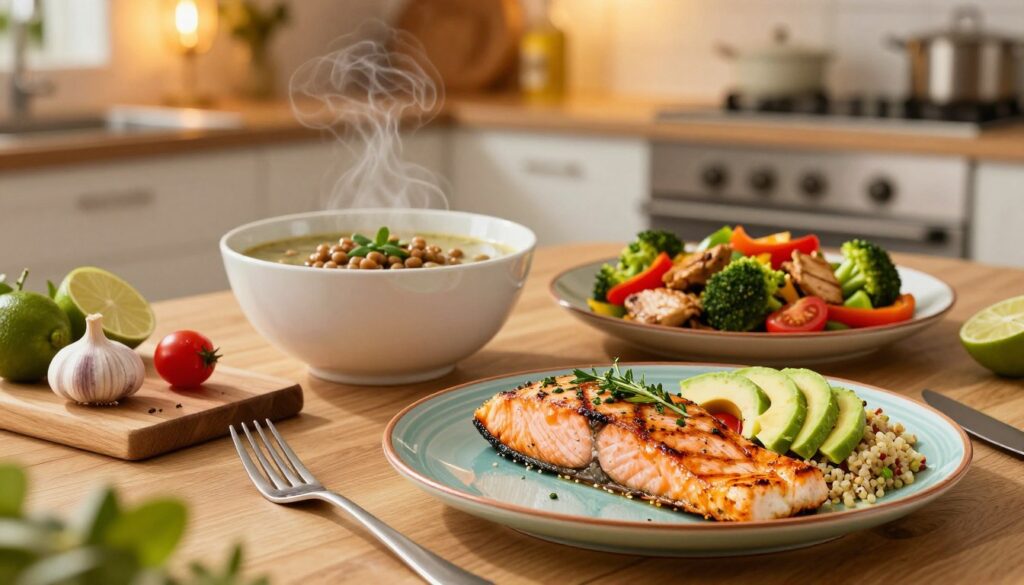
| Day | Recipe | Cooking Method |
|---|---|---|
| 1 | Grilled Chicken | Grill for 6-7 minutes per side |
| 3 | Baked Salmon | Bake at 400°F for 12-15 minutes |
Plant-Based Protein Alternatives
Incorporating plant-based options into your diet can be a fantastic way to enhance your nutrition. These alternatives not only provide essential nutrients but also contribute to a balanced diet.
Tofu, beans, and lentils are excellent sources of protein that can fit seamlessly into your meals. They are versatile and can be prepared in various ways to suit your taste preferences.
Integrating Tofu, Beans, and Lentils
For a fiber-rich option, consider simmering a cup of dried lentils with four cups of broth and seasonings for about 25-30 minutes. This creates a hearty soup that is high in protein.
On another day, heat canned black beans with cumin and garlic powder. Serve them in taco shells topped with salsa and avocado for a delicious meal that supports your protein goals.
Recipes for Vegetarians and Vegans
- Simmer a cup of dried lentils with broth for 25-30 minutes to create a fiber-rich meal that is high in protein.
- Heat canned black beans with cumin and garlic to make a delicious plant-based taco filling that supports your protein goals today.
- Integrating tofu into your diet provides a versatile source of protein that works well in many different plant-based meal recipes.
- These plant-based alternatives are excellent for vegetarians and vegans who want to increase their grams of protein without relying on meat products.
- Beans and lentils are packed with fiber, which helps improve your digestion and keeps you feeling full throughout the entire day.
| Ingredient | Protein (grams) | Fiber (grams) |
|---|---|---|
| Tofu (1 cup) | 20 | 2 |
| Black Beans (1 cup) | 15 | 15 |
| Lentils (1 cup) | 18 | 16 |
Incorporating Dairy and Non-Dairy Protein Sources
Adding dairy and non-dairy sources to your diet can greatly enhance your nutritional intake. Dairy products like Greek yogurt and cottage cheese are excellent options that can easily be included in your meals.
For instance, incorporating Greek yogurt into your diet is a simple way to boost your daily protein intake significantly. This creamy treat can be enjoyed alone or mixed with fruits for added flavor.
Cottage cheese is another versatile ingredient that works well in both sweet and savory dishes. You can easily increase your grams protein count by adding it to salads or smoothies.
Choosing the right cheese can also add flavor and protein to your meals without requiring extensive preparation. Whether it’s shredded on top of a dish or melted in a sandwich, cheese can enhance your eating experience.
For those who prefer to avoid traditional dairy, non-dairy sources are available to meet your protein needs. Exploring different types of cottage cheese and yogurt can keep your diet interesting while supporting your health goals.
Exploring Meat, Fish, and Vegan Protein Options
Finding the right combination of protein sources can be a challenge for many health-conscious eaters. It’s essential to include a variety of proteins in your diet to support your overall well-being. Here are some key options to consider:
Lean Proteins for a Healthy Balance
- Lean chicken and salmon: These are excellent animal-based sources that provide the nutrients your body needs for optimal health and recovery.
- Vegan options like tofu and beans: They offer a great way to diversify your protein intake while enjoying a variety of foods.
- Adding seeds: Incorporating seeds into your meals can provide extra protein and healthy fats, helping you maintain a balanced diet throughout the week.
- Exploring different protein sources: This ensures you never get bored with your daily nutrition while consistently meeting your requirements.
- A healthy balance: Combining meat, fish, and vegan foods is key to long-term success on any high-protein diet.
Meal Prep and Grocery Shopping Tips
Effective meal prep starts with a well-thought-out grocery list to meet your dietary needs. By planning ahead, you can ensure that you have all the ingredients required for your nutritious meals throughout the week.
Here are some strategies to help you stay organized:
- Create a Weekly Grocery List: This is the first step to ensuring you have all the ingredients needed for your protein-rich meals.
- Batch Cooking Strategies: Prepare multiple meals in advance, saving you time and effort during your busy work week.
- Stay Focused: A well-organized grocery list helps you buy the right foods to meet your daily protein intake goals.
- Calculate Protein Content: You can easily determine the grams protein per serving when you prepare meals in batches for the entire week.
- Consistency is Key: Proper meal prep is essential for staying consistent with your nutrition plan and avoiding unhealthy convenience foods.

| Tip | Description | Benefit |
|---|---|---|
| Grocery List | Organize ingredients needed for the week | Reduces impulse buys |
| Batch Cooking | Prepare meals in advance | Saves time during busy days |
| Protein Tracking | Calculate grams protein per meal | Ensures nutritional goals are met |
Flexibility and Customization in Your Meal Plan
Tailoring your food choices to your preferences can make maintaining a healthy diet much easier. Flexibility is a core component of this approach, allowing you to customize your meals to suit your personal health goals.
If you have specific preferences or dietary restrictions, you can swap meals as needed. This ensures your nutrition remains on track while enjoying the foods you love. Customizing your plan helps you stay motivated and committed to your weight loss journey.
We encourage you to adjust your meal plan as necessary. This will help it fit seamlessly into your lifestyle and daily routine. Achieving your fitness goal is much easier when you have the freedom to adapt your plan to your changing needs.
| Customization Aspect | Description | Benefit |
|---|---|---|
| Meal Swaps | Replace meals with alternatives | Maintains nutrition while enjoying preferences |
| Personal Preferences | Adjust meals to fit your tastes | Increases satisfaction and adherence |
| Dietary Restrictions | Modify meals for specific needs | Ensures health goals are met safely |
Overcoming Common Challenges on a High Protein Diet
Navigating dietary changes can often present challenges for many individuals. It’s important to recognize that adapting to a new eating routine may require careful planning. This is especially true if you have specific dietary restrictions or health concerns.
Addressing these challenges early on is essential. For instance, if you have kidney disease or another medical condition, consult your doctor to ensure this diet is safe for you. Proper guidance can help tailor your nutrition to your specific needs.
Addressing Dietary Restrictions
Overcoming common challenges like dietary restrictions requires careful planning. You might need to consult with a healthcare professional for your specific health needs. Fortunately, there are many high-protein foods, including various types of cheese, that can fit into your plan while respecting your restrictions.
Managing Portion Sizes
Managing portion sizes is crucial for success, especially when trying to reach a specific weight loss goal this year. It’s important to listen to your body and adjust your meal portions accordingly. Addressing these challenges ensures that your nutrition remains balanced, allowing you to make progress toward your goals.
Always prioritize your health by making adjustments to your meal plan whenever necessary. This proactive approach will help you stay on track and achieve your desired outcomes.
| Challenge | Solution | Benefit |
|---|---|---|
| Dietary Restrictions | Consult a healthcare professional | Ensures safe and balanced nutrition |
| Portion Sizes | Adjust based on hunger cues | Helps achieve weight loss goals |
| Food Variety | Include diverse protein sources | Maintains interest in meals |
Real-Life Success Stories and Practical Tips
Achieving a balanced diet is a challenge many face daily. Many users have discovered that incorporating healthy fats and protein per meal is key to feeling satisfied and reaching their weight goals.
Real-life success stories often highlight the importance of including healthy fats and protein per meal to maintain energy and focus. Users frequently share how adding seeds and cheese to their favorite foods helped them stay on track with their nutrition.
Motivational insights from others can provide the encouragement you need to overcome obstacles and continue your journey toward better health today. Practical tips like tracking your intake and preparing your meals in advance are common themes among those who have achieved success.
You can learn from the experiences of others to refine your own approach and make your high protein plan even more effective.
Conclusion
Embracing a high-protein meal plan is a sustainable and effective way to support your weight loss journey and overall health. By focusing on balanced meals and consistent protein intake, you can achieve your fitness goals while enjoying delicious, satisfying food daily.
This approach provides the structure and flexibility you need to make lasting changes to your eating habits this year. Remember that weight loss is a gradual process, and staying consistent with your plan will lead to the best results possible.
Start your journey today with this high-protein meal plan and experience the benefits of a healthier, more energized version of yourself.