

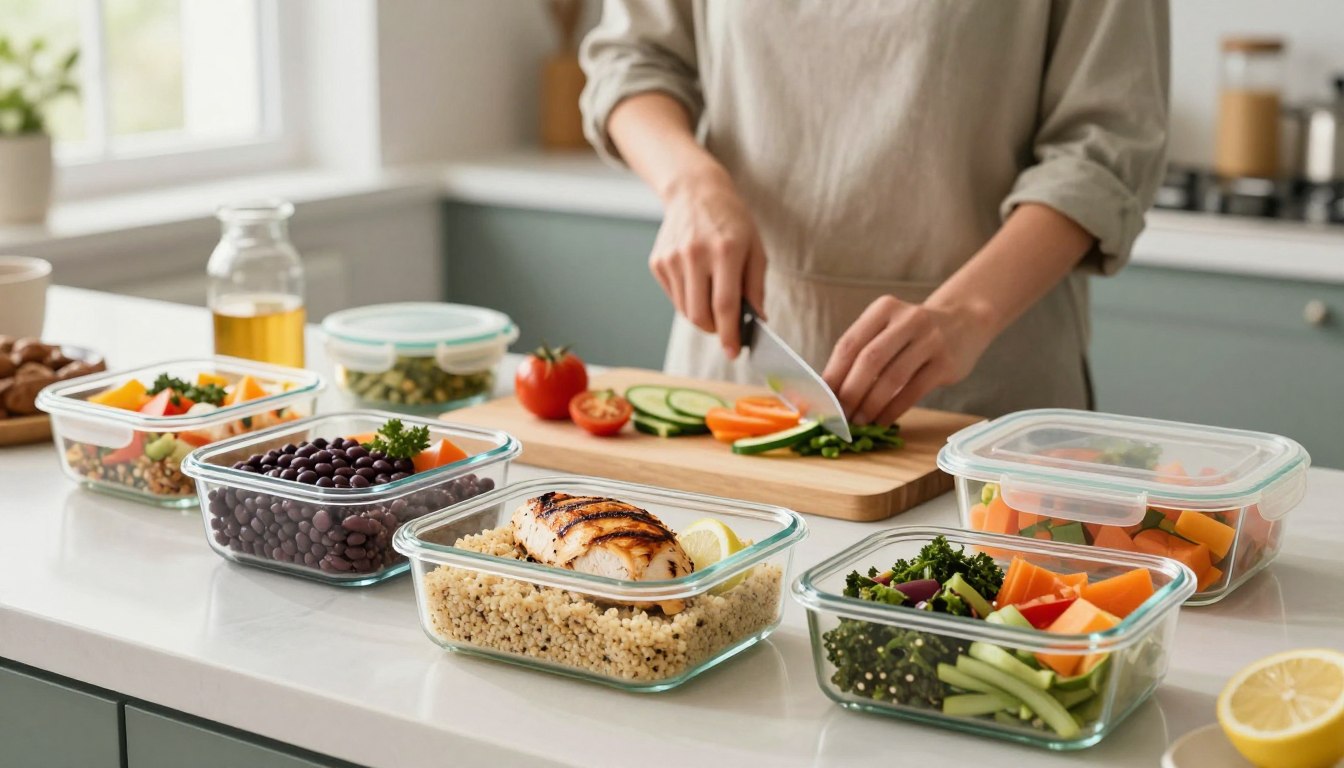
Nearly 70% of Americans report struggling to maintain a balanced diet amid hectic schedules (cite source). If you’re juggling work, family, and little free time, healthy meal prep for busy people is one practical change that puts nutritious, high-protein meals on hand and saves you time.
Updated January 2, 2026 by Jeanine Donofrio and Phoebe Moore, this guide focuses on realistic strategies and efficient kitchen management that fit busy lives. With one focused 60–90 minute prep session each week you can assemble a mix of meals — for example, 3 dinners, 4 lunches, and 5 breakfasts — so you have a ready rotation at home and fewer last-minute takeout decisions.
This article shows simple systems to organize your fridge and pantry, build balanced plates with the right ingredients, and schedule a single affordable cooking session that pays off all week. Expect actionable tips, quick recipes, and printable checklists (download the free shopping checklist and one-hour prep plan) to make meal prep sustainable and stress-free.
Key Takeaways
- Practical meal systems that save time and reduce weekly stress.
- How to plan a short cooking session and stock your fridge so meals are ready to grab each morning.
- Ingredient prep tricks that let you assemble healthy meals in minutes.
- Concrete, protein-forward recipe ideas to hit targets without extra fuss.
- A free printable shopping checklist and a one-hour prep plan to get you started this week.
Introduction to High Protein Meal Prep
Balancing good nutrition with a packed schedule is hard—but thoughtful prep makes it doable. This guide compiles two practical approaches so you can choose the method that fits your taste and week: component prepping (cook once, mix-and-match) or full-recipe batching (assemble complete dishes to reheat).
Both approaches prioritize protein-rich choices to keep you full and energized, reduce decision fatigue, and free up time that would otherwise be spent ordering takeout. The payoff: fewer nightly decisions, lower weekly food costs, and more time back in your day.
How this guide is organized: start with simple planning and essential tools, then quick breakfasts and lunches, followed by dinner ideas, snacks, freezer-friendly recipes, and budget tips. Try one of these two easy formats this week to get started quickly:
- Component batching: big-batch grains + roasted veggies + a protein (shredded chicken or beans) that you combine into bowls, wraps, or salads all week.
- Full-dish batching: assemble and bake 3–4 complete meals (sheet-pan dinners, casseroles) so you have ready-to-heat dinners and predictable leftovers.
Why Choose Healthy Meal Prep for Busy People
When days get full, small planning habits deliver big results. Spend one focused hour of prep and you can cut nightly cooking time, reduce decision fatigue, and reclaim several weeknight hours for rest or hobbies — for example, one 60‑minute session that yields 5 lunches and 3 dinners can save 3–5 hours of cooking across the week.
Variety helps you stick with a plan: rotate proteins, grains, and sauces so meals feel fresh. Practical swaps—chicken one night, a quinoa salad the next, a veggie-forward pasta on another—keep your plate interesting and make it less likely you’ll reach for processed takeout when you’re tired.
Healthy meal prep also supports fitness goals by making consistent protein targets and portion control easy. Add simple protein boosts like beans, lentils, Greek yogurt, or an extra serving of chicken to meals to increase staying power. Start small—one reliable recipe and one repeatable hour of prep—and build a routine that fits your week.
Planning Your Weekly Meal Prep
Life gets busy — but a short, focused planning session turns chaos into a predictable routine. Spend 15–20 minutes each weekend mapping meals to your calendar, then use a shopping list to buy only what you need. This habit reduces waste, saves money, and makes cooking feel effortless.
Use a flexible weekly calendar that reflects social plans and work nights so you don’t double-buy or over-prepare. If you use a shopping-list app with shared lists or pantry tracking, sync it before you go to the store to avoid forgotten items and last-minute runs.
Do a quick inventory of your fridge and pantry before shopping — note proteins, grains, and veggies you already have. Planning around what’s on hand helps you repurpose leftovers, cut costs, and trim active prep time. Example: plan 3 dinners, 4 lunches, and 5 breakfasts from one trip, then turn one dinner into two lunches to stretch ingredients.
Quick 4-step planning checklist
- Check your calendar (15 minutes): mark busy nights, social events, and any days you’ll eat out.
- Inventory the fridge & pantry (5 minutes): list proteins, grains, canned items, and fresh produce you already have.
- Pick 3–5 recipes or component batches: choose a mix of big-batch grains, roasted veggies, and 1–2 proteins to keep variety without extra cooking.
- Build a shopping list by store section: group produce, refrigerated items, pantry staples, and frozen goods to speed the trip.
Save this checklist as a reusable template (CSV or printable) so future weeks take even less time. Tip: when you plan a big batch (cook once for multiple meals), note which days each batch will serve — that’s the shortcut to perfect meal prep.
Protein-Rich Recipes for Breakfast
Breakfast sets the tone for your day — choose protein-forward options so you stay full and focused until lunch. Below are quick, make-ahead breakfast micro-recipes that scale easily for a week of breakfasts and work well for busy mornings.
Overnight Oats and Egg Muffins
Overnight oats are a grab-and-go staple. Prep jars the night before and refrigerate: 1/2 cup rolled oats + 1/2–3/4 cup milk (dairy or plant) + 1 scoop protein powder or 1/3 cup Greek yogurt. Seal and chill 6–8 hours; top with berries, nuts, or a sliced banana in the morning. Prep time: ~5 minutes per jar. (Storage: labeled jars keep 4–5 days in the fridge.)
- Quick recipe — Egg muffins: whisk 6 whole eggs (or 8 egg whites for lower fat) + 1 cup chopped mixed veggies + 1/4 cup grated cheese; divide into a greased muffin tin and bake 20 minutes at 350°F; yields ~6 servings (2 muffins each). Protein: ~10–12g per serving (varies by add-ins).
- Storage tip: label jars and containers with date and main protein; hard-boiled eggs (if used) store safely up to 5 days refrigerated (CDC guidance).
Banana Bread and Breakfast Cookies
Oatmeal breakfast cookies and banana bread are travel-friendly, make-ahead options. Bake a weekend batch and portion into single servings so you can grab one and go. Example: slice banana bread into 8 portions and freeze; thaw a slice in ~30 seconds in the microwave. Cookies store at room temperature for a few days or freeze up to 3 months.
For a lighter, higher-protein choice, try a simple egg-white frittata: mix 2 cups egg whites + 1 cup chopped spinach + 1 cup halved cherry tomatoes + salt/pepper; bake in a 9×9 pan ~20–25 minutes, cool, slice into 6 portions, and freeze single portions for reheating. Approximate calories: ~180 per serving (depends on add-ins); protein ~15–20g.
Mini how-to for Peanut Butter Banana Protein Oats (high-protein variation): 1/2 cup oats + 3/4 cup milk + 1 tbsp peanut butter (or sunflower-seed butter) + 1/2 mashed banana + 1 scoop vanilla protein powder — mix, refrigerate, and enjoy in the morning. Prep time: ~5 minutes. This variation delivers ~20–25g protein depending on powder.
Video demo:
Quick and Nutritious Lunch Options
Short on time at midday? Prep lunches that travel well and deliver balanced macros so you stay energized through the afternoon. Below are make-ahead lunch micro-recipes that are quick to assemble, easy to portion, and simple to reheat or eat cold.
Mason jar instant noodles — Best for office: Layer 1 cup cooked vermicelli + 3/4 cup shredded cooked chicken + 1/2 cup shredded carrot + 1/2 cup thin cucumber + 1 scallion, sliced. Pack 2–3 tbsp dressing (soy + sesame + lime) separately. Typical per jar: ~400 kcal, ~30g protein. Reheat: pour hot water in, cover 1 minute, or transfer to microwave-safe container and heat 60–90 seconds.
Mediterranean chickpea salad — Best for cold lunches: Toss 1 cup canned chickpeas (rinsed) + 1/4 cup chopped artichoke hearts + 2 tbsp sun-dried tomatoes + 1/2 cup cucumber + 2 tbsp olives + 2 tbsp lemon-oregano dressing. Protein: ~15–20g per serving. Store in glass jars with dressing on the bottom and greens on top to stay crisp; keeps 3–4 days refrigerated.
Protein-packed quinoa salad — Best for make-ahead bowls: Combine 1 cup cooked quinoa + 1 cup roasted mixed veggies + 1/2 cup chopped herbs + 1/2 cup chickpeas or 3–4 oz shredded chicken. Dressing: 2 tbsp olive oil, 1 tbsp lemon juice, 1 tsp Dijon, salt, pepper — toss just before serving to avoid soggy greens. Make a big batch of quinoa (big batch = 4–6 cups cooked) to use across lunches and dinners.
Fresh spring rolls — Best for travel: Soften 6 rice papers and fill each with 1/2 cup cooked rice noodles, 3–4 large shrimp (or 3 oz tofu/chicken), julienned veggies, and fresh herbs. Store in a sealed container with a damp paper towel; pair with 2 tbsp peanut dipping sauce. Best eaten within 48 hours for optimal texture.
Buffalo chicken wraps (bento-box style) — Best for reheating or cold eaters: Fill a whole-wheat tortilla with 3–4 oz shredded buffalo chicken, shredded lettuce, and a light slaw. Or pack deconstructed: chicken, tortillas, slaw on the side. Portions generally provide ~25–35g protein. Keep sauces separate to avoid sogginess.
| Lunch OptionMain IngredientsStorage Method / Notes | ||
| Mason Jar Noodles | Vermicelli, Shredded Chicken, Fresh Veggies | Glass jar; dressing separate; refrigerate up to 4 days; reheat 60–90s |
| Mediterranean Chickpea Salad | Chickpeas, Artichokes, Sun-Dried Tomatoes | Glass jar; dressing on bottom; eats well 3–4 days (cold) |
| Quinoa Salad | Quinoa, Zesty Dressing, Veggies | Sealed container; keeps 4–5 days; add protein when serving |
| Fresh Spring Rolls | Rice Paper, Fresh Veggies, Peanut Sauce | Sealed container with damp towel; best within 48 hours |
| Buffalo Chicken Wraps | Shredded Chicken, Wraps, Lettuce | Bento box or wrapped; keep sauces separate to avoid sogginess |
Delicious Dinner Meal Prep Ideas
Dinner doesn’t have to be the hardest part of your day. With a few smart meal prep recipes and some batch cooking, you can have satisfying dinners that reheat well and create ready-to-eat lunches for the week.
Lo Mein — Prep time: 10 minutes; Cook time: 15 minutes; Total ~25 minutes
Ingredients (serves 4): 12 oz noodles (whole-wheat or soba), 3 cups mixed stir-fry veggies, 12 oz protein (tofu, chicken, or shrimp), 1/3 cup sauce (soy, sesame, honey, garlic). Toss hot noodles with stir-fried veggies and protein. Typical fridge life: 3–4 days. Tip: choose whole-wheat or soba for extra fiber and a small protein boost.
Chicken Parm Meatballs — Prep: 15 minutes; Cook: 20 minutes
Ingredients (makes ~12 meatballs): 1 lb ground chicken (or turkey), 1/2 cup breadcrumbs, 1 egg, 1/4 cup grated Parmesan, 1 cup marinara, 1/2 cup shredded mozzarella. Brown meatballs, simmer in marinara, top with cheese. Store sealed 3–4 days in the fridge or freeze up to 2 months. Swap: use plant-based ground meat for a vegetarian-friendly option.
Whole-Wheat Summer Pesto Pasta — Prep: 10 minutes; Cook: 12 minutes
Ingredients (serves 4): 12 oz whole-wheat pasta, 1 cup pesto, 2 cups roasted veggies, 8 oz protein (grilled chicken, chickpeas, or tofu). Toss cooked pasta with pesto, veggies, and protein. Keeps 3–4 days refrigerated. Make a big batch of pasta and swap proteins midweek for variety.
Sheet Pan Greek Chicken — Prep: 10 minutes; Cook: 30–35 minutes
Ingredients (serves 4): 1.5–2 lbs chicken thighs or breasts, 1 lb baby potatoes, 2 bell peppers, 1 red onion, 2 tbsp olive oil, lemon, oregano. Roast until chicken is cooked through; finish with lemon and a sprinkle of oregano. Fridge life: ~4 days. Serve over mixed greens or grain bowls to repurpose leftovers.
Healthier Homemade “Hamburger Helper” — Prep: 10 minutes; Cook: 20 minutes
Quick formula: 1 lb lean ground beef or turkey + 8 oz whole-grain pasta + 2 cups mixed veggies + light tomato-cheese sauce. Stir together and simmer until everything is hot and saucy. This version gives more fiber and fewer processed ingredients than boxed mixes.
Weekly rotation idea: Monday — Lo Mein; Wednesday — Sheet Pan Greek Chicken; Friday — Chicken Parm Meatballs. Add the pasta or hamburger-helper midweek to keep variety and avoid takeout. Save these recipes as printable cards (CTA) to streamline grocery lists and weeknight cooking.
Easy Snacks and Sides for Busy Days
When your schedule is packed, ready-to-grab snacks prevent energy dips and poor takeout choices. These simple, make-ahead options are cost-effective, portable, and pair well with main meals — perfect for busy mornings, office breaks, or travel.
Fruit Parfaits, Protein Bars, and Jerky
Homemade beef jerky — Best for travel and protein boosts: Thinly slice lean beef, marinate, and bake low-and-slow in the oven if you don’t have a dehydrator. Slice into single-serving bags. Typical portion: ~8–10g protein per 1 oz. Storage: refrigerate up to 1 week, freeze up to 2 months. (Check a trusted food-safety source for oven temps and safe drying times.)
Pumpkin spice latte protein bars — Best for grab-and-go mornings: No-bake bars made from protein powder, pumpkin purée, oats, and warming spices. Make a big batch and cut into portions. Typical portion: ~10–15g protein depending on powder. Store in the fridge up to 7 days or freeze portions for longer use. Nut-free swap: sunflower-seed butter instead of peanut butter.
Avocado hummus snack jars — Best for office snacks: Blend 1 avocado + 1 cup canned chickpeas + 1 tbsp lemon + 1 clove garlic + 1 tbsp olive oil; portion into small jars with carrot sticks or whole-grain crackers. Typical serving: ~4–6g protein. Keep chilled and eat within 3–4 days.
Spicy garlic parmesan popcorn — Best for low-calorie cravings: Make stovetop popcorn and toss with a light garlic-parmesan seasoning. A typical serving (~3 cups) is a satisfying, lower-calorie snack compared with many packaged options. Portion into small bags for grab-and-go convenience; best same day to maintain crispness (up to 2 days).
Prep & storage tips: Make snacks in a single weekend session (30–60 minutes), label containers with date and portion size, and store single-serve portions where they’re easy to reach. Having these options on hand saves time and keeps energy steady between meals.
| Snack OptionMain IngredientsPreparation Method / Storage | ||
| Beef Jerky | Lean Beef, Spices | Oven or dehydrator; slice into single servings; refrigerate 1 week, freeze 2 months; ~8–10g protein/oz |
| Pumpkin Spice Protein Bars | Protein Powder, Pumpkin, Oats, Spices | No-bake; refrigerate up to 7 days or freeze portions; ~10–15g protein/serving |
| Avocado Hummus | Avocado, Chickpeas, Garlic | Blend; portion into jars; refrigerate 3–4 days; ~4–6g protein/serving |
| Spicy Garlic Parmesan Popcorn | Popcorn, Garlic, Parmesan | Stovetop; portion into bags; best same day to 2 days for crispness; low-calorie snack |
Batch Cooking Basics
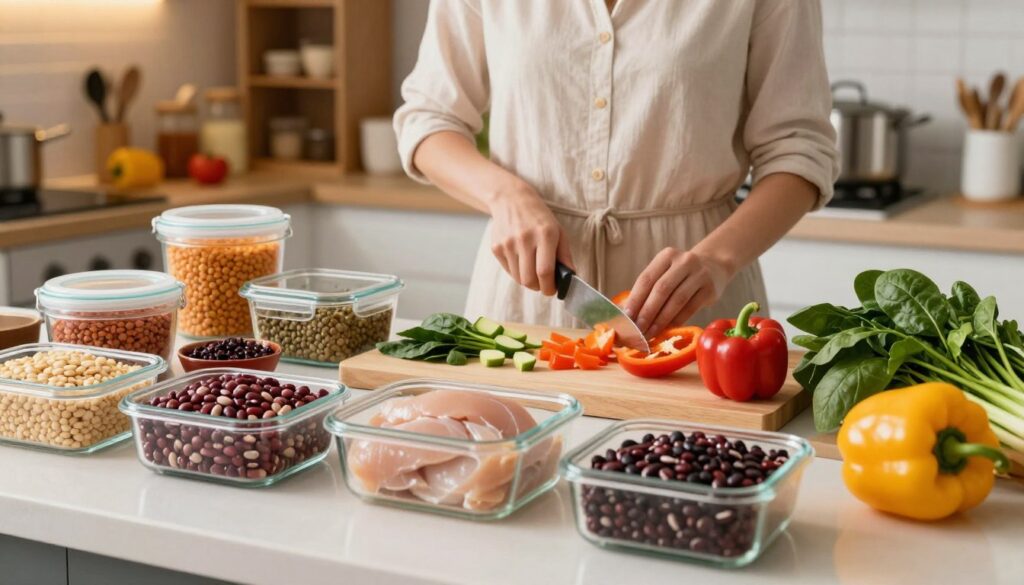
Batch cooking is the fastest way to turn one focused cooking session into multiple ready-to-eat meals for the week. A single one-hour session (or several short blocks) can shave daily cooking time, reduce grocery waste, and leave you a reserve of healthy meals when life gets busy — perfect for big-batch planning.
Before you start, clear space in the fridge and freezer and gather containers so you won’t scramble mid-session. Tools that speed the work: a food processor for chopping, a box grater for cheese, two sheet pans and one large roasting pan so you can work on several components at once. Use clear, airtight, freezer-safe glass containers when possible and label each with the date and main protein (e.g., “chicken — 2026-01-10”) to avoid mystery meals later.
Make the time enjoyable: queue a podcast or audiobook, set a timer, and follow a simple plan so batch cooking feels efficient, not overwhelming.
Planning, Cooking, and Storing in Bulk
- One-hour batch session plan: 10 min setup (preheat oven, line pans, prep tools) + 40 min active cooking (roast veggies, cook a grain, sauté a protein) + 10 min pack & label.
- Timed checklist you can copy: 0:00–0:10 setup; 0:10–0:30 cook grains & oven trays; 0:30–0:50 finish proteins & sauces; 0:50–1:00 portion and label.
- Fridge/freezer checklist: clear two shelves, have 6–8 airtight containers (24–32 oz for meals, 12–16 oz for sides/snacks), and leave headspace in freezer containers for expansion.
- Work smarter: use a food processor to chop veggies and grate cheese in minutes; use one pan for roasted veggies and another for protein to save time and cleanup.
- Big-batch base: cook a large pot of rice or quinoa (big batch = 4–6 cups cooked) to repurpose across lunches and dinners (think grain bowls, quinoa salad, fried rice).
- Labeling format: write content + date + reheating note (e.g., “Quinoa salad — 01/10 — eat cold” or “Chicken thighs — 01/10 — reheat 165°F”) to make grabbing meals automatic.
- Keep it fun: play music or a podcast, and treat the session like a short self-care routine to reduce prep friction and make easy meal prep repeatable.
Overnight Oats for Grab-and-Go Breakfast
When mornings are rushed, overnight oats are a dependable, fiber-rich breakfast you can prep in minutes and eat all week. They’re portable in a Mason jar and easy to scale for big-batch prep so you never skip breakfast.
Quick how-to (base recipe): combine 1/2 cup rolled oats + 1/2–3/4 cup liquid (milk, almond, or oat milk) + 1–2 tbsp yogurt OR 1 scoop protein powder. Stir, seal, and refrigerate 6–8 hours. Label jars with the date; stored cold, prepared oats keep 4–5 days in the fridge.
Two high-protein variations (copy-paste recipes):
- Greek Yogurt Berry Oats — 1/2 cup rolled oats, 1/2 cup milk, 1/3 cup plain Greek yogurt, 1/2 cup mixed berries, 1 tsp honey. Prep time: ~5 minutes. Approx. macros per serving: ~310 kcal, 16–20 g protein (depends on yogurt).
- Peanut Butter Banana Protein Oats — 1/2 cup rolled oats, 3/4 cup milk, 1 tbsp peanut butter (or sunflower-seed butter), 1/2 mashed banana, 1 scoop vanilla protein powder. Prep time: ~5 minutes. Approx. macros per serving: ~380 kcal, 20–25 g protein (depends on protein powder).
Allergy-friendly swaps: use dairy-free yogurt or plant-based protein powder; swap peanut butter for sunflower-seed butter. Topping ideas: chopped nuts, chia seeds, fresh fruit, or a pinch of cinnamon. For variety, rotate flavors each day or double the recipe to cover multiple mornings.
| Recipe NameMain IngredientsPreparation Time | ||
| Classic Overnight Oats | Rolled oats, Milk, Honey | 5 minutes |
| Berry Blast Oats | Oats, Mixed Berries, Greek Yogurt | 5 minutes |
| Peanut Butter Banana Oats | Oats, Peanut Butter, Banana, Protein Powder | 5 minutes |
| Chocolate Chip Oats | Oats, Almond Milk, Chocolate Chips | 5 minutes |
| Apple Cinnamon Oats | Oats, Apples, Cinnamon | 5 minutes |
Make-ahead plan for a 5-day week: prepare 5 jars using the base recipe or two flavors (e.g., 3 Berry + 2 Peanut Butter Banana). Or make a big dry mix (oats + spices + optional protein powder) so each morning takes under a minute to assemble.
CTA: download the 5-recipe overnight oats PDF to print or save to your phone for quick meal prep inspiration.
Meal Prep Tools and Equipment
Good meal prep starts with a few right tools — they save time, reduce frustration, and make batch cooking easier. You don’t need every gadget; prioritize versatile items that match your routine at home and speed up the work.
Must-haves: clear, airtight, freezer-safe containers (glass or BPA-free plastic) to store full meals and leftovers in the fridge; glass meal-prep bowls for microwaving lunches; and Mason jars for overnight oats, dressings, and layered salads. Recommended sizes: 12–16 oz jars for breakfasts and snacks, 24–32 oz containers for single-serve lunches or dinners.
Nice-to-haves: a food processor or high-power blender to chop and puree quickly, a reliable baking sheet and a large roasting pan for sheet-pan dinners, and reusable silicone bags or Ziploc bag holders for portioning and freezing. Look for microwave- and dishwasher-safe labels to make cleanup faster.
Pantry basics: keep versatile ingredients on hand — rice, quinoa, canned beans, canned tomatoes, and a set of core spices — so you can assemble healthy meals without extra store runs. If you use delivered proteins, check any affiliate or discount details before linking (disclose as required in your CMS).
- Quick equipment checklist — Must-have: 6 airtight 24–32 oz containers, 4 jars (12–16 oz), a mixing bowl, and a good knife. Nice-to-have: food processor, reusable silicone bags, and sheet pans.
- Storage tip — Use glass where possible for longevity; label containers with date and main protein (example: “chicken — 2026-01-10”) to rotate meals easily.
- Budget tip — Start with a small starter kit (3–4 multi-use containers + 2 jars + one sheet pan) and add specialty items later; thrift stores and discount retailers often have quality glassware for less.
| Container Size | Best For |
| 12–16 oz jars | Overnight oats, dressings, snacks, parfaits |
| 24–32 oz containers | Single-serve lunches/dinners, grain bowls |
| Freezer-safe larger containers | Family-size casseroles or batch-cooked proteins for freezing |
Extra Tips for Time-Saving Meal Prep
Small, consistent habits are the backbone of efficient meal prep. Focus on quick ingredient prep, smart repurposing, and a stocked pantry so you can assemble healthy meals in minutes on busy days.
20-minute ingredient prep (do this once a week): chop 3 sturdy vegetables (carrots, bell pepper, broccoli), wash and spin greens, cook a big pot of grains (rice or quinoa), and portion a protein (shredded chicken or canned beans) into containers. Store components separately so you can mix-and-match meals all week.
Repurpose leftovers: roast a whole chicken for dinner, then use the meat for tacos the next day and chicken salad the day after — same ingredients, three different meals. This reduces cooking time, stretches ingredients, and cuts food waste.
| Tip | Description | Benefit |
| Ingredient Prep | Prep vegetables, grains, and proteins ahead without cooking full recipes. | Saves time during the week; makes assembly fast |
| Repurpose Leftovers | Transform last night’s dinner into tomorrow’s lunch or a new dish. | Reduces cooking time and food waste |
| Stock Staples | Keep canned beans, frozen vegetables, quick grains, and basic sauces on hand. | Quickly assemble meals without planning |
Staples to keep on hand: canned beans, canned tomatoes, bagged frozen vegetables, rolled oats, pasta, rice/quinoa, nut or seed butter, and a jarred sauce or two. These ingredients let you combine prepped items into filling meals in minutes.
Leftover transformation examples: roasted veggies + quinoa + tahini = grain bowl; leftover chicken + tortilla + salsa = quick tacos; mashed sweet potato + black beans + greens = warm bowl. Label containers with date and contents and follow safe fridge time limits (generally 3–4 days) to stay food-safe.
Quick checklist (copy to phone):
- Set a 20-minute timer on prep day.
- Chop 3 veggies + wash greens.
- Cook 2–3 cups grains (rice/quinoa).
- Portion 3–4 servings of protein (shredded chicken, beans).
- Store separately, label with date, and plan which days each item will be used.
CTA: Save or print this 20-minute prep checklist to make your next meal prep session faster and more consistent.
Incorporating Veggies and Whole Grains
Adding more vegetables and whole grains to your meals boosts flavor, fiber, and satiety — especially useful when you’re doing meal prep for a busy week. Whole grains like quinoa, farro, and brown rice provide texture and slow-release energy; quinoa in particular offers more protein per cooked cup than many other grains, making it a smart base for protein-packed grain bowls and salads.
Roast a large tray of vegetables (sweet potatoes, broccoli, cauliflower) during your batch session — roasted veggies keep well in the fridge for 3–4 days and can be used as sides, tossed into salads, or folded into tacos and burritos to add volume and nutrients without extra effort.
Flavor makes the difference: a bright sauce can turn the same grain-and-veggie base into a fresh meal. Try tahini-lemon, tzatziki, or a cilantro-lime dressing to change the profile of bowls across the week. If you want fewer carbs, swap cauliflower rice for regular rice in burrito bowls to add bulk with less starch.
| Grain Type | Benefits (per cooked cup, approximate) | Best Uses |
| Quinoa | ~8 g protein, good fiber; higher protein than many grains | Salads, bowls, protein-packed sides (try quinoa salad) |
| Farro | Chewy texture, fiber and minerals | Soups, hearty grain bowls |
| Brown Rice | Whole-grain carbs and B vitamins | Stir-fries, sides, burrito bowls |
| Forbidden Black Rice | Antioxidant-rich, slightly sweet | Salads, special-occasion bowls |
| Wheat Berries | Very chewy, long-cooking, high in fiber | Salads, pilafs, make-ahead batches |
Build-a-Grain-Bowl Template
Use this simple formula to assemble bowls from your meal-prep components: 1 cup cooked grain + 3–4 oz protein (chicken, beans, or tofu) + 1 cup roasted or fresh veggies + 1–2 tbsp sauce. Example combos that work well for a week of lunches:
- Quinoa salad: quinoa + chickpeas + roasted broccoli + tahini-lemon dressing (approx. 18–22 g protein depending on chickpeas/portion).
- Farro bowl: farro + shredded chicken + roasted carrots + tzatziki (protein ~25–30 g with 3–4 oz chicken).
- Brown rice bowl: brown rice + black beans + cauliflower rice + cilantro-lime sauce (plant-forward, protein ~12–18 g).
Prep tips: cook a big batch of your chosen grain (big batch = 4–6 cups cooked) and portion into containers, roast two sheet pans of vegetables at once, and store sauces separately to keep bowls fresh. Label containers with the grain type and date for quick grabs. CTA: save these 3 grain-bowl combos to your weekly planner to rotate flavors and make healthy meal prep effortless.
Integrating Freezer-Friendly Recipes
If you want true meal-prep resilience, build a rotation of freezer-friendly dishes you can rely on when the week gets away from you. Freezer-ready meals save time, reduce waste, and mean a hot, nourishing dinner is just a reheating step away.
Freeze smart: use airtight, freezer-safe containers or vacuum-seal bags, label each item with date and contents, and portion meals in single-serving or family-size containers depending on your needs. Thaw overnight in the fridge when possible and reheat until the internal temperature reaches a safe level (165°F / 74°C for most reheated dishes with poultry or mixed ingredients).
Baked Ziti — Assemble in a baking dish and wrap tightly; freeze up to 3 months. Reheat from frozen or thawed: bake at 350°F for ~1 hour (thawed will take less time). Pair with a quick salad for a complete meal. (Single-serve tip: divide into smaller casserole dishes before freezing.)
Baked Falafel Balls — Form, bake, cool, and freeze on a tray before bagging; freeze up to 2 months. Reheat in a 400°F oven for ~8–10 minutes to crisp, or air-fry. Serve with pita, tzatziki, and a grain for a balanced plate.
Black Bean Burgers — Shape patties, flash-freeze separated by parchment, then store in a sealed container for up to 2 months. Reheat in a skillet or oven until hot. Top with avocado and greens and serve with roasted sweet potato for a filling meal.
Homemade Taquitos — Assemble and freeze on a baking sheet before transferring to bags; keep up to 1 month. Reheat in the oven until crisp. Finish with a quick slaw or sliced avocado for freshness.
Soups and Stews — These freeze exceptionally well for up to 3 months and often taste better after a day or two. Cool fully, portion into airtight containers leaving a little headspace for expansion, and label. Reheat on the stove or microwave; brighten flavors with fresh herbs or a squeeze of lemon before serving.
| Recipe | Freezing Time | Reheating Instructions / Notes |
| Baked Ziti | Up to 3 months | Freeze in dish or airtight container; bake at 350°F ~1 hour (thawed quicker); single-serve pans work well |
| Baked Falafel Balls | Up to 2 months | Freeze on tray then bag; reheat at 400°F ~8–10 min; crisp in air-fryer |
| Black Bean Burgers | Up to 2 months | Freeze patties separated by parchment; reheat in oven or skillet until hot |
| Homemade Taquitos | Up to 1 month | Freeze on tray then bag; reheat until crisp in oven |
| Soups and Stews | Up to 3 months | Cool fully, freeze in portions with headspace; reheat on stove or microwave, finish with herbs |
Quick tips: thaw overnight in the fridge for more even reheating, leave headspace in containers for expansion, and keep a running “eat-by” list on your freezer door so nothing gets forgotten. CTA: download the Freezer-Friendly Meal Planner to map which meals to freeze each week, whether to portion for single meals or family dinners, and the reheating times/temps to use.
Meal Prep on a Budget
Eating well on a budget is entirely possible with a little planning and smart shopping. Meal prep reduces impulse takeout, stretches ingredients across multiple meals, and saves both money and time — making healthy home-cooked meals the default instead of a rare treat.
Estimated savings example: five homemade lunches (rice, beans, roasted veg, and shredded chicken) can cost roughly $10–12 total to make at home versus $40–60 for five takeout meals. These are estimates to show the scale of savings; your local prices may vary, but batching staples and repurposing leftovers consistently cuts weekly food bills.
Sample budget week (per-meal cost estimates):
- Lunches: Rice & black beans + roasted veggies + shredded chicken — approx. $1.50–$2.50 per lunch.
- Dinners: Sheet-pan chicken with potatoes and broccoli — approx. $2.50–$4.00 per serving.
- Breakfasts: Overnight oats or egg muffins — approx. $0.75–$1.50 per serving.
- Snacks: Homemade protein bars or hummus jars — approx. $0.50–$1.00 per portion.
Budget-friendly strategies:
- Batch cook grains, proteins, and veggies to reduce per-meal cost compared with buying single meals.
- Repurpose ingredients across meals (dinner ➜ lunch ➜ bowl) so nothing goes to waste and each purchase serves multiple meals.
- Buy staples in bulk — rice/quinoa, oats, canned beans, and frozen vegetables — and focus on seasonal produce to lower per-meal cost.
Bulk buy & freezing tips: when purchasing bulk rice/quinoa or ground meat, divide into meal-sized portions and freeze extras immediately. For example: buy a 5 lb bag of rice, portion 1–2 cups (dry) per freezer bag for later; buy a whole chicken, roast it, then freeze extra shredded meat in 2–3 cup portions.
Starter budget grocery list: rice or quinoa, canned beans, frozen mixed vegetables, eggs, rolled oats, peanut or sunflower-seed butter, canned tomatoes, and a versatile protein (whole chicken or bulk ground meat). These items combine into many low-cost recipes and keep your weekly plan flexible.
Cheap snack & protein swaps: oven-made beef jerky (use lean cuts and follow safe oven guidelines), homemade protein bars (no-bake), and bulk-buying nuts or seeds can be cost-effective alternatives to expensive prepackaged snacks.
CTA: download the printable “Budget Meal Prep” grocery list to plan one affordable week of meals, get bulk-quantity suggestions, and see a sample shopping budget that you can adapt to your local prices.
Staying Motivated with Meal Prep
Keeping meal prep consistent is easier when you make it simple, measurable, and a little enjoyable. Use a free weekly meal-prep calendar (printable or digital) to map what you’ll eat, when you’ll prep, and how leftovers will be reused — so the habit becomes automatic instead of another decision on a busy night.
Knowing there’s a healthy meal waiting at home reduces stress and decision fatigue, and it’s a surprisingly powerful motivator after a long day. Treat meal prep as small, recurring wins: one prep session delivers multiple ready meals that free up time and mental energy during the week.
Using a Weekly Calendar
Plan two things into your calendar each week: 1) a 30–60 minute prep block (or one focused hour for batch tasks), and 2) the meals you’ll eat on busy nights. Example snapshot: Sunday — 60-minute prep (cook grains, roast veggies, portion protein); Monday — Lo Mein (from prepped components); Wednesday — Sheet-pan chicken (leftovers for Thursday lunch).
Tracking Progress and Adjusting Portions
Track a few simple metrics to stay motivated: number of meals prepped, dollars saved versus takeout, and average protein per meal. If meals are consistently too large or small, tweak portion sizes next week — aim for roughly 3–4 oz (85–115 g) of cooked protein per serving as a starting guideline, then adjust to your appetite and goals. Use a kitchen scale or measuring cups to standardize portions until you get a feel for perfect meal prep sizing.
- Practical habit tips: set a recurring calendar reminder, prep with a friend or partner for accountability, and reward yourself monthly (new spice, a container upgrade, or one planned takeout night).
- Progress metrics to track: meals prepped/week, lunches taken vs. bought, dollars saved, and average protein per meal.
- Easy wins: swap one takeout meal per week for a meal-prep dinner — small changes compound into big time and money savings.
CTA: Download the free weekly meal-prep calendar and a simple tracker to visualize progress across days and weeks — a quick way to turn meal prep into a lasting, low-effort habit and to find your favorite meal prep routine or the perfect meal prep session length for your life.
Conclusion
Try one simple change this weekend: spend 60 minutes planning and prepping food the way you plan your week. Thoughtful meal prep delivers reliable, healthy meals that support energy, focus, and your fitness goals — and it removes the nightly stress of deciding what to eat. Download the free checklist and weekly calendar to get started.
Consistency beats perfection. Begin with a single 60-minute session (cook a grain, roast vegetables, and portion a protein) and build from there. Small wins — one prepared lunch or dinner at a time — add up to big time and money savings, and make it easier to eat healthy meals at home even on the busiest days.
Enjoy creating meals that nourish you: pick a few favorite recipes, rotate proteins and sauces for variety, and use the printable checklist and calendar to keep the habit simple. For a perfect meal prep routine, focus on repeatable components (grain + protein + veggies + sauce) and tweak portions until they fit your appetite and week.